
SEPTIC SYSTEM DESIGN PROCESS
While each septic design is unique there are specific steps that need to be taken for each one to ensure I have all the information I need to design the proper septic system for every client. After initial contact is made with the landowner I follow these basic steps.
- Land Record Research: I review the Towns Assessing database and Land Use Regulations, gathering tax maps, tax cards, deed references and Zoning Regulations. I then check the Registry of Deeds looking for survey plans and to get a quick history of the property.
- Site Evaluation: I try to visit each site before contracting with and/or starting any work for a client. This allows me to get an initial view of each property to better understand its natural features, limitations and potential issues. If a site visit isnt practical, such as a client being an hour away, I can do a digital evaluation of the property by studying topographic, wetland and soil maps and aerial photography, such as Google Earth.
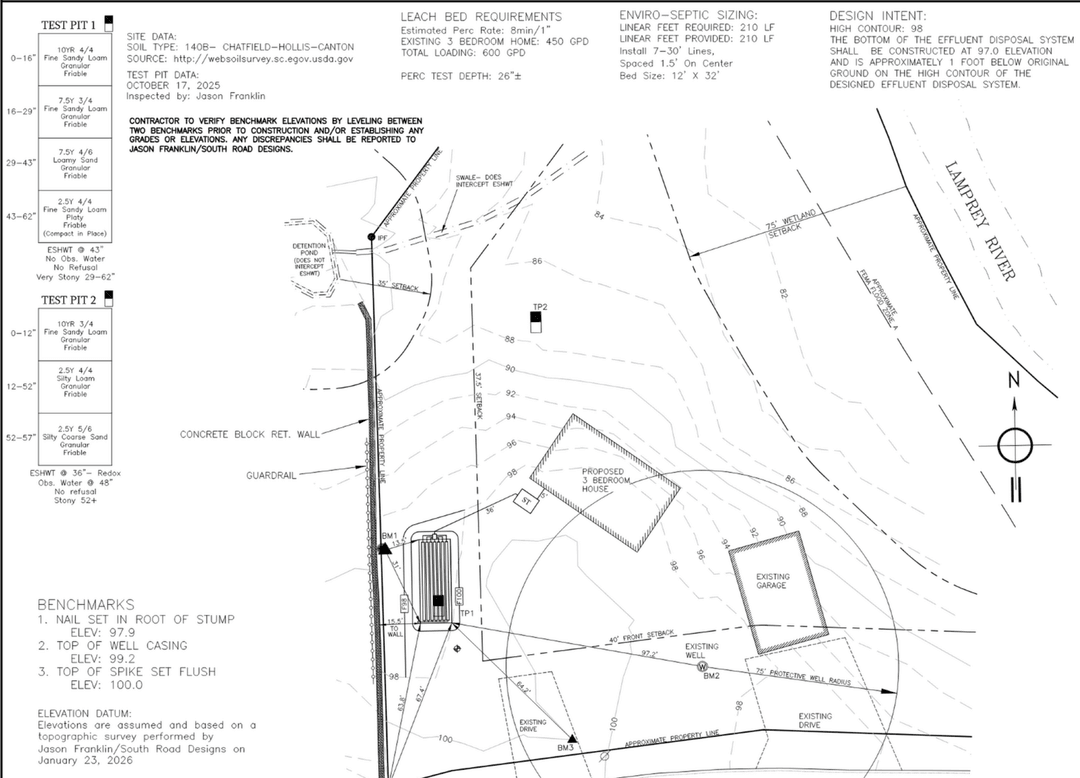
- Test Pits: Test pits need to be dug with an excavator in the area of the leachfield. In many cases the Town Building Inspector needs to be on-site at the time the test pits are dug. I will coordinate a time with the Contractor digging the test pits and Town official to get this done.
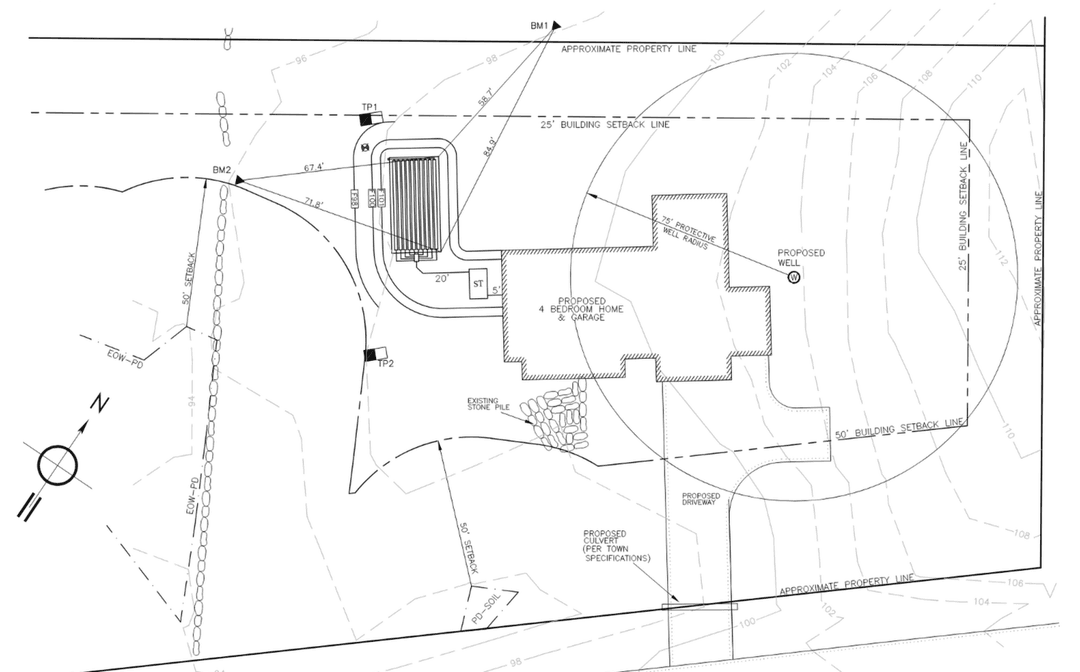
- Topographic Survey: I perform a topographic field survey to prepare an existing conditions plan for the area of development. This survey includes locating buildings/structures, wetlands, roadways/driveways, wells, utilities, boundary monuments, ground elevations and any other features that could impact the septic system design.
- Work Sheet: From the data gathered during the topographic survey I produce a work sheet to bring to the client to determine the layout of the house, leachfield, septic tank, well and driveway. Once we have the initial layout decided, I start the design.
- Septic Design: Using guidance from the work sheet meeting with the client, I start the design process. If at any point during this process the clients wishes cannot be met, I will contact them to go over the issue and what can be done to solve them. Once completed, I send the design to the client to review and get back to me with any questions, concerns or changes they may want to see before I finalize the design.
- Approval Process: Once completed, the design needs to go through the approval process. Most towns require their own review and approval by the Town Building Inspector before the design is sent to the State Department of Environmental Services for their final review and approval. I prepare all the design applications and guide it through the local and State approval process.
- Design Approval: Once the design approved by the State, they issue a “Construction Approval”. This approval is good for four years. To obtain a building permit, the client typically brings the State approved septic design to the Town Building Inspector who then issues the permit for construction.